
Garden Shed Insulation Guide For Arkansas
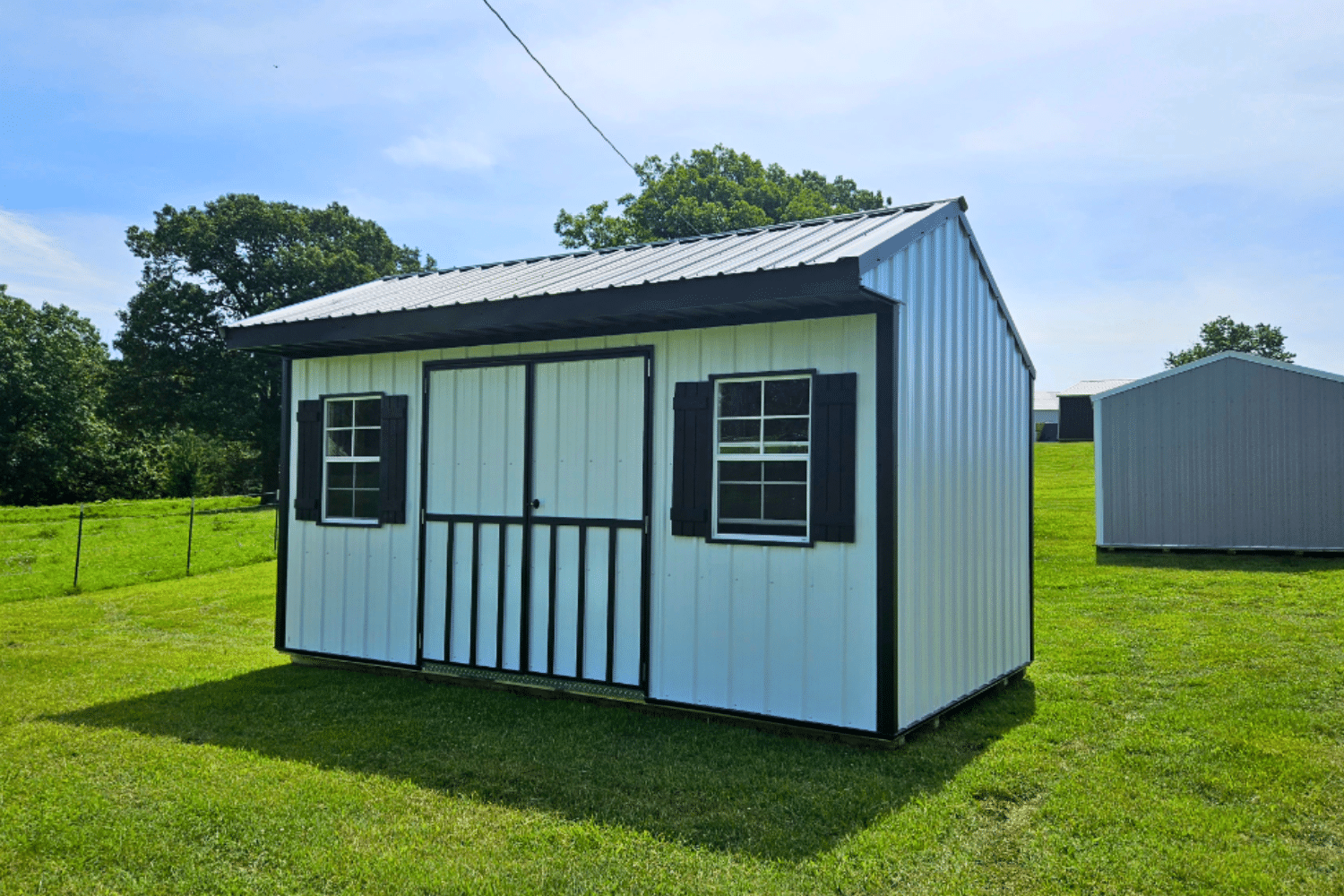
Garden Shed insulation can take your simple storage shed to the next level. Making your shed an amazing year-round workspace or ADU. Many people think that this process can be time-consuming and difficult.
Yet, that is not actually the case. In fact, most of the time, you can insulate your garden shed in a matter of a few hours with minimal tools.
So, let’s get into it.
What Is Garden Shed Insulation?
Garden shed insulation is the same kind of insulation you would use for your home. Often times, this is done either with batt insulation, spray foam, or foam board. Additionally, there are other methods to achieve insulation for your shed, but they tend to be a bit more costly or time-consuming. The ultimate purpose of insulating your garden shed is to give you more climate control.
Do I Have To Insulate My Garden Shed In Arkansas?
Yes and No. You do need to insulate your garden shed. Especially if your shed is going to be used for storing seasonal decorations, yard tools, and lawnmowers, however, you should consider insulating your shed if the desire is to use it for more than lawn tool storage. If you aren’t quite sure if you should insulate your shed, take a look at the list below to see what we can do in your situation.
| Garden Shed Insulation Needed | Garden Shed Insulation Not Not Needed |
| Year-Round Hobby Space | Hand Tool Storage |
| Used As Living Quarters | Lawn Mower / Weed Wacker Storage |
| Storing Temperature Sensitive Items | Season Decorations Storage |
| Improving Climate Control | Outdoor Toy Storage |
If you still aren’t sure whether or not you need an insulated shed, contact us and we will help clear up the matter for you.
How Do I Install Batt Insulation For Garden Sheds In Arkansas?
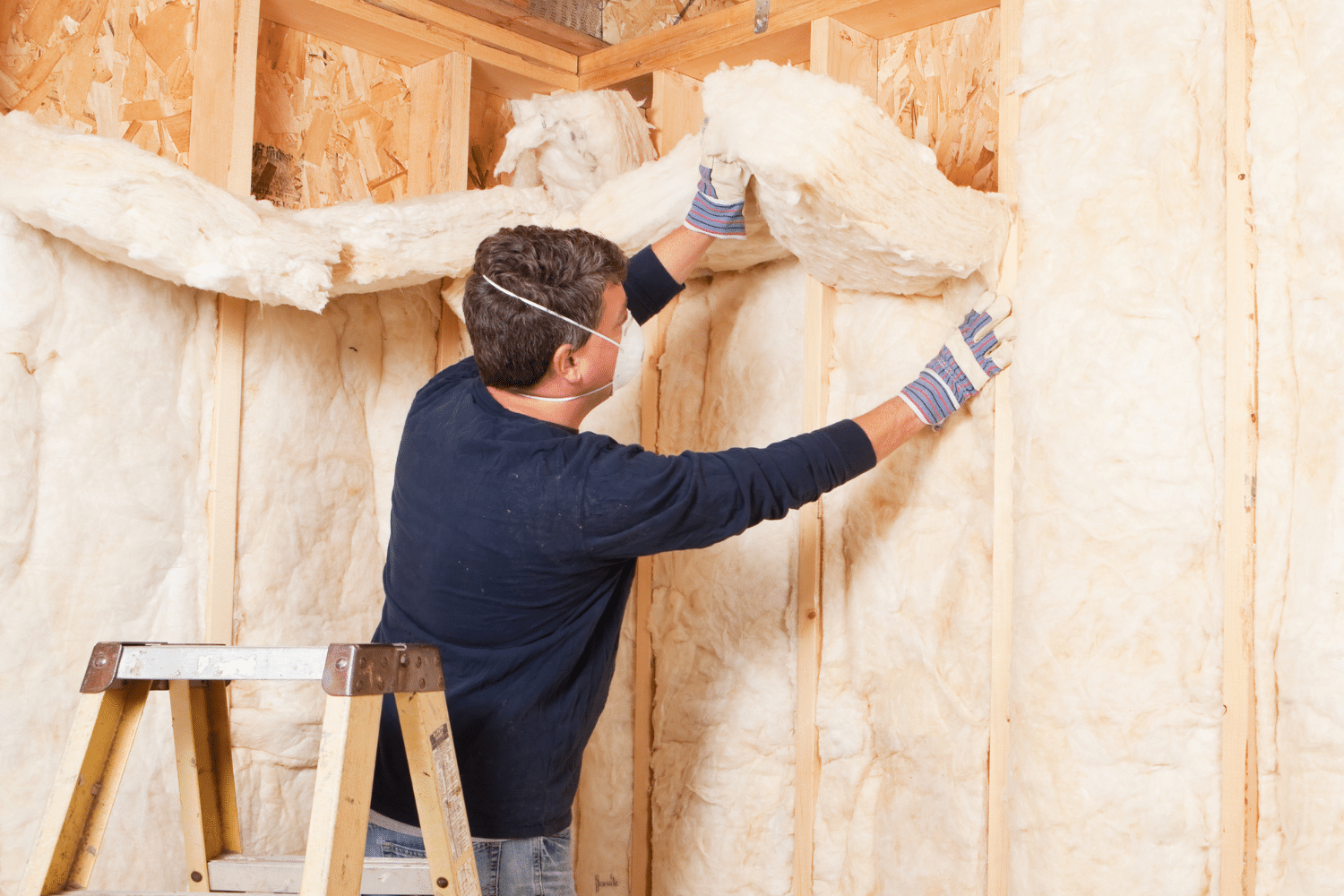
Batt insulation is the most common type of insulation used in garden sheds. It is readily available at most home improvement stores. One of the things we like the most about batt insulation is that it is very forgiving.
We recommend getting a paper-backed batt to create a vapor barrier between the exterior wall and the interior.
Step By Step Guide For Batt Insulation For Garden Shed
Materials Needed
Batt Roll
Tape Measure
Utility Knife
Stapler
*Before you do any of this, make sure that you measure and figure out how many linear feet of batt insulation you need. Simply measure from the top of the top plate to the floor to give you a relatively accurate measurement, including some excess, in case any mistakes are made.
Measure The Width Of Your Stud Spacing
We will make this easy for you. If you buy a metal-sided shed from us, our studs are spaced 24” in the center. If you buy a wooden-sided shed from us, they are spaced 16” in the center. However, if you are looking at this guide to understand how to do your insulation, make sure you measure the width of the cavity to know what size batt you need.
Measure The Height Of Your Wall
To Measure the height of your walls, you will want to measure from the bottom of the top plate to the top of the sole plate. This will tell you how long your batt insulation should be. Measure out how long of a piece you need from the batt role, and then use a utility knife to cut the piece that you need.
Tack Your Batt Insulation
Place your batt between the studs. You will see that with the paper-backed batts, there is about a ½” overhang on either side of the paper. Use this space to staple it to the stud work. Repeat this process until the roo is finished.
Do I need to Place a Vapor Barrier On Batt Insulation?

Yes. Your batt insulation should have a vapor barrier on the back side. You can usually find some kind of batt insulation with a paper backing. On the other hand, if you can’t find paper-backed batt insulation, you can purchase a vinyl sheet that can be tacked onto the stud work, covering the entire wall.
How Do I Complete Spray Foam Insulation For Garden Sheds In Arkansas?
Spray foam insulation for garden sheds has become very popular, especially for its ease of application. Several kits can be purchased online to ensure the shed is properly insulated. We recommend that you use closed-cell spray foam insulation.
How To Apply Closed Cell Spray Foam Insulation
- Remove everything from your Shed
- Seal off any windows and vents that you do not want to spray
- Put your spray foam kit together.
- Spray your foam, but only between the stud and rafter space
- Let the first pass dry, and do your subsequent passes.
- Remove any excess that may have gotten onto the studs.
- Clean up your spray foam kit
- Put the items back in your shed and enjoy!
When you are completing your spray foam insulation, it should be at least 2 inches thick. If it is any less than 2″, it will not offer the desired insulation effects. However, if all you are trying to do is offer a bit of moisture.
How To Install Foam Board Insulation For Garden Sheds
Foam board insulation is another popular way to insulate your garden shed. However, this is probably our least favorite option. Not because it’s bad or ineffective but because it’s a little more difficult and time-consuming. Essentially, foam board insulation combines the skills needed for batt insulation with the lightweight advantage of foam.
Installing Foam Board Insulation
- Measure the space between your studs, as well at the bottom of the top plate and top of the sole. Mark 1.25” less in width and length on the piece of foam. So if it measures 14.25” width and 84” tall, you want a piece that is 13” wide and 82.75” tall.
- Place some liquid nail in the cavity to hold the foam board in place. Do your best to center the foam board in the cavity when placing it on the liquid nail.
- After your foam board is in place, use a can of expanding foam to tighten up the edges around it.
And that is it. As you can see, this kind of insulation is relatively easy to do but it involves some extra steps that spray foam and batt insulation allow you to avoid.
What Is the Cheapest Garden Shed Insulation?

The affordable, or cheapest garden shed insulation is Batt Insulation. As we mentioned earlier, this type of insulation can be purchased at most home improvement stores relatively easily. We love how simple this install is and how cost effective it is.
What Is The Easiest Garden Shed Insulation to Do By Myself?
Spray foam insulation and batten insulation are split down the middle, which is the easiest DIY garden shed insulation to complete by yourself. What we like about the spray foam insulation is that it can be done quickly and by one person in one day. However, it can get messy and has a bit of a learning curve. On the other hand, we like batten insulation because this, too, can be completed by one person, is not as messy, and is easy to work with. However, batt insulation installation is bit more laborious than pulling the trigger on a spray gun.
Is Closed Cell or Open Cell Garden Shed Insulation Better?
Closed-cell insulation is best for your garden shed insulation needs. It will not allow water or air to pass through it, meaning you will have an airtight seal in the areas where your spray foam has been completed. Open-cell insulation will allow wind and water to pass through. This means more material is needed to accomplish the same insulative level of closed cells.
What Is The Best Way To Insulate The Bottom Of My Shed?
The best way to insulate your shed floor is to have it done before it is delivered. We highly recommend insulating your floor with closed-cell spray foam insulation. You can try to do this after your shed has been delivered, but unless it is elevated, the chances of you being able to do this successfully are pretty slim.
Should I Insulate The Bottom (Underside) Of My Garden Shed?

Yes. Overall, we think it is best to insulate the underside of your shed. The primary reason is that once your shed is installed, it is very difficult to insulate this portion of the shed unless it is up on some kind of block foundation or raised pier system.
Insulating the floor of your garden shed makes it easier to upgrade the rest of your shed to livable standards if you choose to.
Should I Have An Air Gap In My Garden Shed Insulation And Wall?
Yes. An air gap between the insulation and the walls is needed to prevent excess moisture. Without that, the shed will be prone to mold and mildew. While some people may overlook it, ventilation for small buildings is necessary to prevent issues with moisture.
Do I Need To Do Plumbing And Electricity Before I Insulate My Garden Shed?

Yes. Your plumbing and electricity should be done before insulation. Insulation needs to be placed on top of all electrical and plumbing lines. This is because the electrical and plumbing can become difficult to place if the insulation is already in place.
Does Ozark Premier Buildings offer Insulation For Their Sheds?
Yes. If you would like to have the insulation for any of our buildings before receiving it, we are here to help. We offer closed-cell spray foam insulation that can be done from floor to ceiling. The cost is dependent on the shed size and the amount of insulation you would like done.
When you are ready to purchase your garden shed, contact us. Whether you desire a pre-insulated shed or just the shell, we are ready to help. Take a look at our inventory or contact us to have your shed designed.